Sorry, you need to enable JavaScript to visit this website.
Skip to content
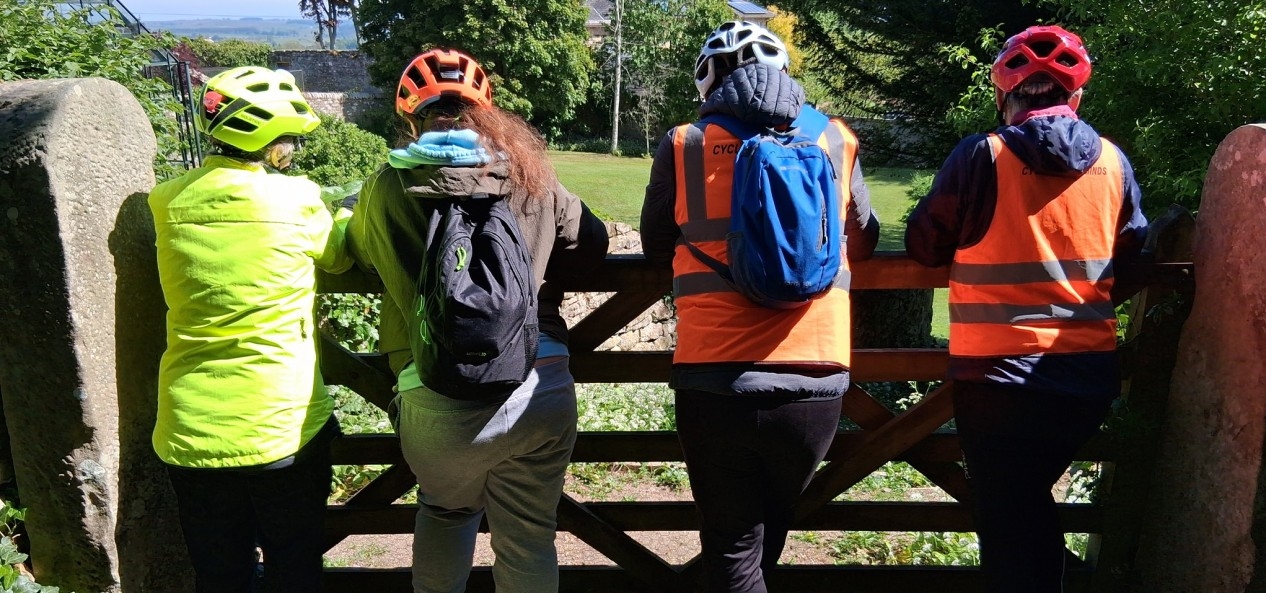
Four cyclists wearing helmets, hi-vis clothing and backpacks look over a fence into a field.
  • Does your club or group have access to green spaces?
  • Are you committed to supporting participants and volunteers with their mental health and wellbeing?

Trying new activities or exercising in public can be a daunting task. For people with mental or physical health issues, low confidence or a lack of social support this can be even more difficult.

In Hexham, the Cycling Minds programme is tackling these barriers head on and helping people taking their first step towards being more active. 

Research from Woodland Trust demonstrates that exercising in green spaces, like parks, wetlands, gardens and woodlands, can positively impact individuals’ physical and mental wellbeing.

We spoke with Jo Elliott, beneficiary engagement manager from The Hextol Foundation, to find out how outdoor e-biking (electric biking) is supporting people’s wellbeing, empowering them to try new things and reap the benefits of sport and physical activity. 
Cycling Minds’ top tips

If you’re short on time, Cycling Minds have shared their top pieces of advice. You can read on for more detail on their organisation’s journey. 

1. Do the boring stuff 

Health and safety might not always be the most exciting thing to focus on, but it really matters. Providing appropriate training, equipment and risk management are all essential for ensuring safe experiences for participants and volunteers.

2. Look after your volunteers

Supporting people’s wellbeing starts with your team too. Be mindful of how much you ask of volunteers and remember that volunteering needs to fit around their lives.

3. You can’t ‘fix’ people

It’s important to acknowledge you can’t ‘fix’ people or solve their problems; you’re simply providing a different, safe means for them to connect with nature, move their bodies or find social connection – all of which can be incredibly supportive when dealing with poor health and wellbeing.

4. Talk to people how you’d like to be spoken to

When working with communities and individuals low in confidence, or facing mental health challenges, it’s important to normalise their experience. 

Ask people how you can support them and try to tailor your sessions so that it meets their needs. Treat them as you’d wish to be treated and make sure they have control of their activity experience. 

Who are Cycling Minds?

With rides led entirely by volunteers, Cycling Minds was initially set up as a Community Interest Company (CIC) in 2023 to improve people’s mental wellbeing and physical health through e-biking. 

The programme is based in the north of England and is now part of The Hextol Foundation, who provide additional support with administration and communications.

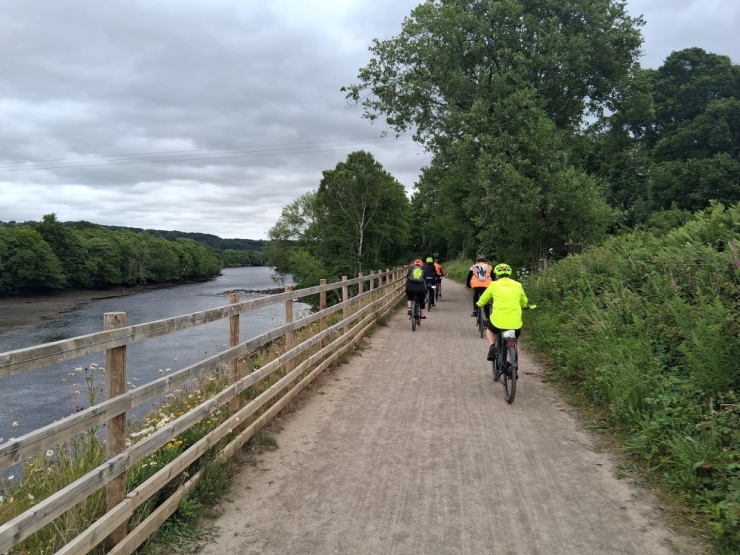
Four cyclists ride on a tree-lined path beside a river.

Today, Cycling Minds provide four supported e-bike rides each week for people aged 18 and over. 

The rides help people get active, enabling them to spend time outdoors and meet others. 

Participants can explore the local Northumberland countryside by e-bike, with routes designed around different levels of cycling experience and confidence, all while minimising the pressure on fitness and competitiveness by using e-bikes.

“There are a real range of people that come on the programme. From people with disabilities, to older adults and younger people. They can meet others and mix with people they might not have interacted with before.”

Funding through Cycling UK helped provide first aid and bike maintenance training to ride leaders, as well as e-bikes for the Cycling Minds programme. 

Their commitment has helped Cycling Minds offer supported rides to people who may not have been able to cycle independently.

“We’ve seen individuals that have been struggling with confidence when they first joined Cycling Minds and now, through our sessions, they’ve improved with confidence and communication skills. It’s about looking at each individual and asking ‘what can we help them achieve?’”

This year alone, the programme has delivered over 100 rides and continues to support people across the community. 
 

Why are green spaces important to Cycling Minds’ mission?

The Cycling Minds programme is designed to help improve people’s mental and physical health, while also increasing people’s self-confidence. 

To help achieve this mission, exercising in green spaces has become an important part of Cycling Minds’ approach.

“We are fortunate to live in an area with beautiful scenery and countryside.” 

Research from Mind has shown that exercising in nature, or green spaces, can reduce stress, improve moods, support better sleep patterns and help peoples’ overall wellbeing.

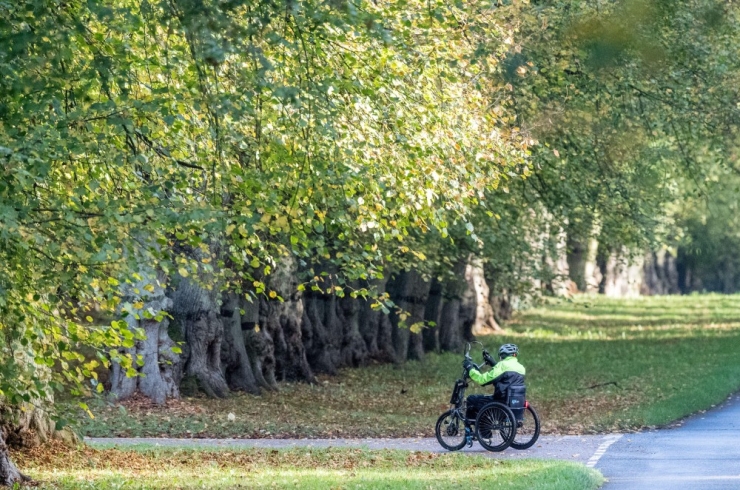
A man using a handbike rides down a road beside a row of mature trees.

For some, despite living a short distance away from outdoor spaces, they can still find it difficult to access these areas. 

This could be because of vehicle restrictions, inaccessible routes, lack of public transport or health and wellbeing challenges.

Cycling Minds help remove these barriers by offering a safe and supported way for people to travel sustainably and explore green spaces by e-bike.

Facing challenges

Cycling Minds has many moving parts, from ensuring equipment, accessibility and safety standards, to maximising the positive benefits for participants and volunteers.

They’ve understandably faced challenges while keeping it running smoothly: 

Equipment
Cycling Minds have found it difficult to find smaller, accessible e-bikes. For those who are shorter, have additional physical requirements or perhaps are less experienced, smaller e-bikes are more suitable. These aren’t the easiest to source and this has been an ongoing challenge for the organisation.
Health, safety and risk management
It’s critical to ensure the health and safety of all participants and volunteers. There’s an added level of complexity for those who are less confident on the bikes and when the rides are on shared roads with vehicles.
Protecting people’s information
Many people on the Cycling Minds programme have carers, additional support needs or are vulnerable adults. Protecting everyone’s information is essential. It’s vital that the team handle sensitive information correctly and have clear guidance for those who might need additional support on the rides.

Despite these challenges, the Cycling Minds team continually reviews and learns from the difficulties they face and are prepared to grow, adapt and keep providing a quality service for their communities. 

What’s next?

The work supporting people’s wellbeing and self-confidence through outdoor physical activity doesn’t stop here. Cycling Minds is now looking to build on its work through a new partnership with Northumberland National Park.  

The partnership will explore opportunities to use e-bikes in the national park, in an attempt to expand the programme’s reach and support more people through activity, green space and social connection.

For others looking to use sport and physical activity to support people with their mental health and wellbeing, it’s important to know how to do this safely and where your job ends and a mental health professional's might start. 

Mind have guidance on safer practice that can support you; explore Buddle's breakdown to get you started.