Sorry, you need to enable JavaScript to visit this website.
Skip to content
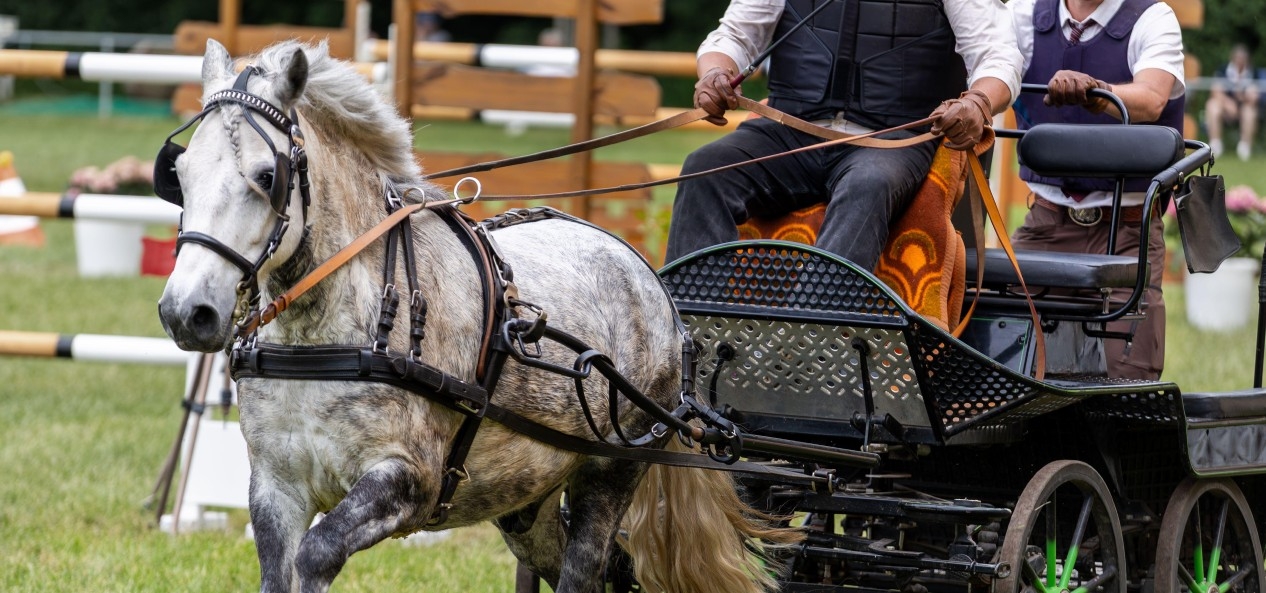
A grey pony pulls a carriage being steered by two equestrians drivers on a grassy showground.

Many disabled people, and those with long-term health conditions, want to be more active, but face barriers that can make taking part challenging. 

Creating spaces where disabled people can access opportunities, and feel welcome and included, usually requires a person-centred approach.

Lots of organisations up and down the country take this approach when delivering activities, including the Carriage Driving Community. 

We spoke with their founder, Gemma Owens, to find out how they’ve created an offer for their local community that’s fully accessible and inclusive for disabled people.
What's the Carriage Driving Community?

Carriage Driving Community are a Community Interest Company (CIC) based in Bircotes, an ex-mining town near Doncaster. 

Motivated by her own lived experience of disability, Gemma set out to create an accessible and inclusive community where everyone could get involved in physical activity.

Run by a team of dedicated professionals who volunteer their time, the Carriage Driving Community offers opportunities for non-disabled and disabled people to learn carriage driving – an equestrian sport and leisure activity in which one or more horses pull a carriage guided by a driver.

Carriage driving can be adapted to be accessible to people with a wide range of needs, including using specially designed carriages for wheelchair users. This means that lots of people can experience the benefits, including:

  • improved co-ordination and balance
  • engagement with a non-traditional sporting activity
  • relaxation through rhythmic movement and activity in the open air
  • social activities that encourage teamwork and build confidence
  • opportunities for non-disabled and disabled people to be active together.

While the Carriage Driving Community is open to everyone, they have a particular focus on engaging disabled people, including those with non-visible disabilities, neurodiversity and long-term health conditions.

What do they offer to their community?

Weekly tuition

Available to all abilities, for participants to learn and develop carriage driving skills at their own pace.

A variety of activities are offered to keep sessions engaging, and those who wish to can progress to competitive opportunities.

Wellbeing sessions

After approaching their local GP to support social prescribing initiatives, the Carriage Driving Community have set up a fully funded programme for those referred through health and care pathways.

Apprenticeship programme

To inspire the next generation, non-racing NVQ level 2 and 3 apprenticeships are offered in partnership with the National Horseracing College.

How are the Carriage Driving Community inclusive?

The community works hard to break down the barriers, including financial barriers, that often stop disabled people from participating. These include:

  • providing affordable opportunities to get involved, with different membership options to best suit individuals
  • subsidising lesson costs, where possible, through fundraising efforts or grant funding
  • loaning participants equipment so they don’t have to buy anything, including helmets, boots and clothing. They also have an accessible carriage for wheelchair users
  • working with their participants to understand their individual needs and circumstances, so they can make any reasonable adjustments to support them
  • seeking additional training opportunities to help them better engage their disabled and neurodivergent participants. This has included completing online courses offered by the Riding for the Disabled Association (RDA).

What’s next?

The Carriage Driving Community have several plans to help raise awareness and improve their offer. These include:

  • continuing to attend community events and visit other local organisations such as care homes. It’s hoped this encourages more people to join as they witness how accessible carriage driving can be
  • providing further support for participants in areas such as mental health and loneliness
  • hosting more events with other local carriage driving clubs and providing further carriage driving training opportunities with national partners for their members
  • working with their national governing body, British Carriage Driving, to become an affiliated centre.
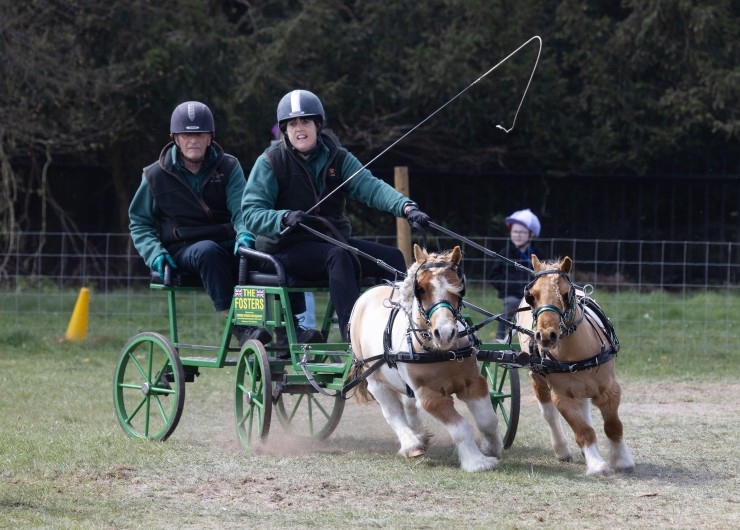
Two miniature Shetland ponies carriage driving with two riders on a British Scurry and Trials Driving obstacle course in a race.

Top tips

Drawing on their experiences, the Carriage Driving Community have shared their top tips for others looking to become more inclusive for disabled people:

Take a person-centred approach. Everyone is an individual and only they know what support they need. Don’t over-complicate it, just ask!
Offering social prescribing is a great way to engage people. Speak to your local GP practice and if they can’t help, they’ll able to put you in touch with someone who can.
Get help from others. Volunteers can offer different ideas, solutions and support. But to retain and develop volunteers, be prepared to support them to ensure they have a positive experience.
Don’t be afraid to fail as you’ll never find out what works if you don’t do it! Having a test and learn approach can make a big difference over time.

Learn more about engaging volunteers